

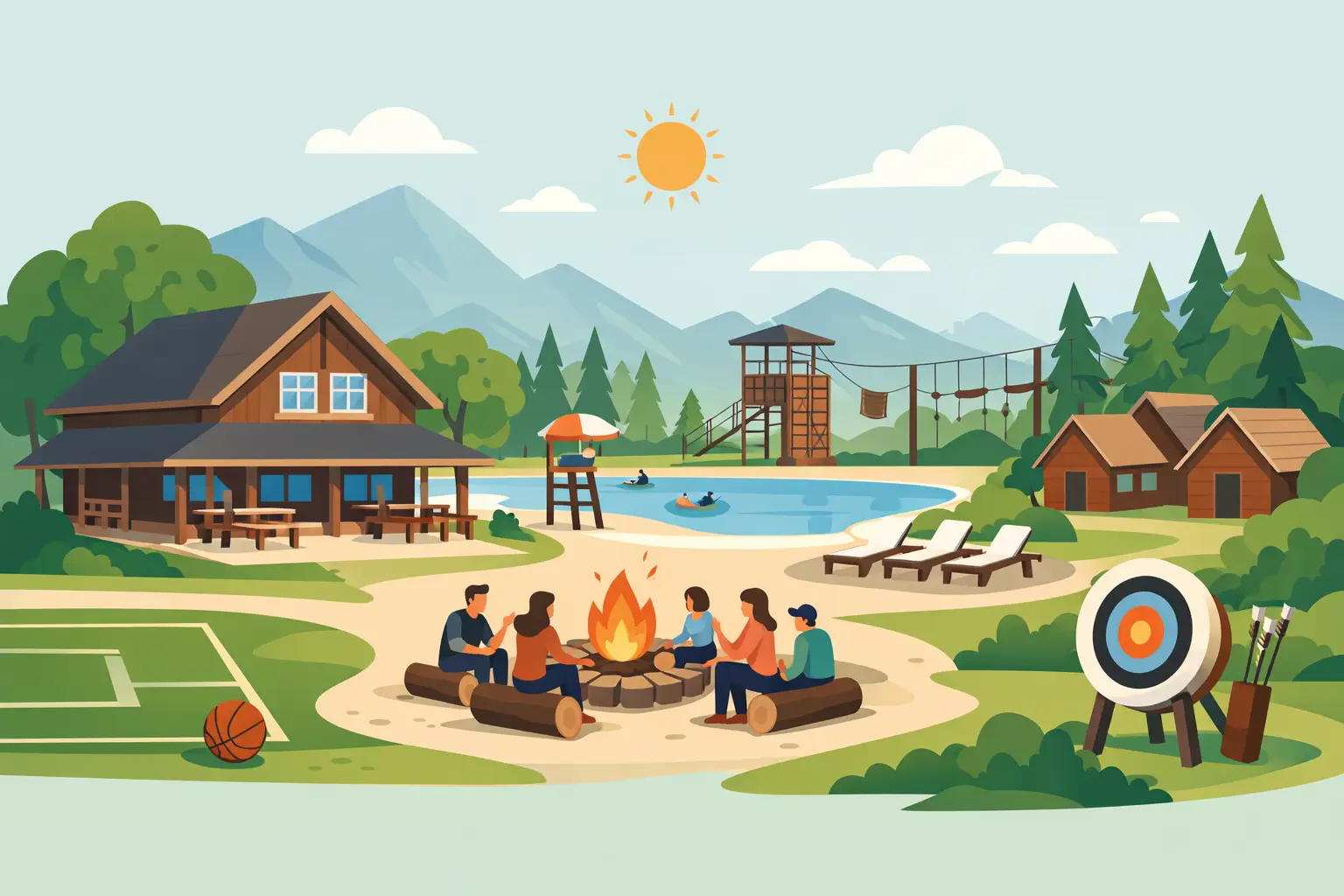
A camp can have a beautiful mountain setting and an exciting itinerary, yet still feel difficult if the practical details are scattered across several locations. The right camp facilities bring sleeping, meals, supervision, activities, and downtime together so organizers can focus on the group rather than solve logistics all day.
For youth camps, school groups, family retreats, themed weekends, and team-building programs near Bran, the best choice is rarely the largest property. It is the place that can provide a calm base, clear coordination, comfortable routines, and enough flexibility for the personality of your group.
What Good Camp Facilities Should Provide
A successful camp needs more than beds. Participants need a place where they can rest properly after a full day outdoors, eat at predictable times, spend time together without feeling crowded, and enjoy a safe, welcoming atmosphere. Organizers need a partner who understands that schedules change, dietary requests arise, and every group has different energy levels.
Accommodation is the starting point. Rooms and apartments should be comfortable, clean, and easy to organize for the age and composition of the group. For children and teenagers, room assignments, adult supervision, and proximity between accommodations matter. For adult retreats or corporate groups, privacy and quiet can be just as important as shared spaces.
Meals are equally central. A camp schedule loses momentum when guests must travel elsewhere for breakfast, lunch, or dinner. On-site dining allows the day to flow naturally, especially when menus can be planned around group preferences. A varied kitchen is helpful for longer stays: traditional Romanian dishes can sit alongside familiar international options, while vegetarian needs, allergies, and children’s preferences should be discussed before arrival.
Shared space gives a program its rhythm. Depending on the camp, this may mean a dining room that can host a group meal, an indoor area for workshops and evening games, or outdoor space for informal activities. The goal is not to fill every hour. It is to have room for the moments that make participants feel connected.
Choosing Camp Facilities for Your Type of Group
The best setup depends on who is coming and what the program needs to achieve. A weekend for families has different priorities from a youth camp, and a company retreat should not be planned exactly like a school trip.
Youth camps and school groups
For young guests, structure creates comfort. Organizers should confirm room capacity, the number of accompanying adults, meal timing, and the availability of spaces for indoor activities if weather changes. A countryside property can be especially valuable because children have room to disconnect from screens, enjoy fresh air, and take part in nature-based experiences.
Ask early how arrivals and departures will be handled. If transportation is included in the program, the property should have a practical arrival plan for buses or coordinated transfers. It also helps to establish one contact person for the group, meal updates, and daily schedule changes.
Safety is not only about rules. It also comes from a property layout that is manageable, hosts who know the group plan, and a setting where adults can supervise without constantly moving between distant buildings. Smaller, more personal locations often make this easier than oversized resorts.
Family camps and multi-generation stays
Family groups need a balance between togetherness and breathing room. Parents appreciate easy meal service, child-friendly routines, and a setting where children can spend time outdoors. Grandparents may value a quieter pace, comfortable seating, accessible common areas, and meals that feel familiar and satisfying.
The strongest family camp programs leave room for choice. One family may want a carriage ride or a mountain walk, while another may prefer a slow afternoon by the property. A hot tub session can be a welcome treat for adults, while group games or seasonal activities create natural fun for younger guests.
Pet-friendly options can also make a family retreat much easier to plan. For many travelers, a pet is part of the family, not an afterthought. Clear pet accommodation arrangements help organizers avoid last-minute uncertainty and allow more guests to join comfortably.
Team-building groups and adult retreats
Companies, clubs, and special-interest groups usually need a productive daytime format paired with relaxed evenings. In this case, confirm whether the venue can support a meeting, course, discussion, or presentation in addition to accommodation and meals. It is also useful to plan the difference between formal time and informal time rather than treating the entire stay as a packed agenda.
A quiet Bran-area setting supports this balance well. Guests can gather for a workshop, step outside for fresh air, enjoy a shared meal, and return to a more focused conversation without the distractions of a busy city hotel. The trade-off is that boutique properties may have more intimate capacity, so larger groups may need rooms arranged through nearby partner accommodations.
The Questions Organizers Should Ask Before Booking
Before you choose a property, share the real shape of your program. Give the host the group size, age range, preferred room arrangement, dates, meal needs, and a rough activity schedule. This allows the facility to recommend a workable plan instead of offering a generic package that may not fit.
You should also clarify whether the number of guests is firm or likely to change. Camp attendance often shifts in the weeks before arrival, and knowing the property’s approach to rooming lists, meal counts, and final confirmations can prevent confusion later.
For groups with a full itinerary, ask about meal service timing and whether packed or adjusted meals are possible for planned excursions. If your group will return late from an activity, dinner arrangements should be agreed upon in advance. These small operational details are what make a program feel well cared for.
It is worth discussing weather alternatives, too. Mountain weather can be part of the charm, but it should not derail a camp. Indoor games, workshops, themed evenings, cooking experiences, or group discussions can keep the atmosphere positive when outdoor plans need to change.
Why an Intimate Setting Can Work Better
Large campsites and resorts can be useful for very high participant numbers, but they are not automatically the best fit. A boutique guesthouse offers a different kind of experience: guests are more likely to know one another, organizers can communicate directly with the hosting team, and meals feel like shared occasions rather than service lines.
At Hillden Boutique Șimon Bran, the 13 rooms and apartments create a comfortable base for smaller organized groups, while local accommodation partnerships can help extend capacity when needed. The on-site restaurant, family-friendly setting, pet services, and options for tailored activities make it possible to shape a stay around the group instead of asking the group to fit a fixed template.
This approach works particularly well for camps that value a warm atmosphere over a crowded program. A photography group may need early breakfast and flexible return times. A senior group may prefer a slower schedule with hearty meals and quiet evenings. A youth camp may need clear daily structure and active outdoor time. Each format benefits from attentive hosting and a plan built around real needs.
Plan the Experience, Not Just the Overnight Stay
The accommodation decision should support the whole camp experience. Start with the purpose of the trip: connection, learning, celebration, outdoor activity, rest, or a combination of these. Then choose facilities that make those goals easier to achieve.
A well-planned camp gives guests a comfortable place to wake up, good food to gather around, enough space to participate, and quiet moments to recharge. When those basics are handled with care, the mountains, conversations, and shared memories can do the rest.